BLOG: FIELD NOTES
Can AI Replace Your Virtual Assistant? A Real-World Look at What Each One Does Best
A plain look at which tasks AI handles well, which still need a person, and how to split the work in a Shopify, Gorgias, and HubSpot setup.

FIG. 01: A task board shows who owns what, and where work waits for a person.
QUICK ANSWER
Can AI replace a virtual assistant?
Not fully. AI can take over repeatable, rules-based work such as drafting replies, tagging tickets, summarizing threads, and moving data between apps. It does not replace the judgment, context, and accountability of a good virtual assistant. The setup that works best is a VA who runs AI tools and automations, with a human approving anything that touches money, customers, or contracts.
I use ChatGPT, Claude, and Gemini every day alongside Zapier and Make, in e-commerce operations built on Shopify, Gorgias, and HubSpot. This post covers what each one does well in a real workflow, using published forecasts where they exist.
What does the data say right now?
Three published numbers frame the question.
- Forecast for AI in support. Gartner predicts that by 2029, agentic AI will resolve 80% of common customer service issues without human intervention, with a 30% cut in operating costs. Note the word “common”. It is a forecast about routine requests, not every request.
- Speed expectations. In a 2026 Infobip survey across nine markets, 47% of consumers expected a support answer within five minutes, and 85% expected an order confirmation within five minutes. About 63% had already used AI when shopping.
- Peak-season load. One roundup of Shopify Black Friday and Cyber Monday data reports that support volume spikes by 80% or more during that week.
Put together, customers now expect fast first answers, and AI is the only affordable way to give them at 2 a.m. during a sale. None of that says anything about the harder tickets, which is where customers decide whether to buy again.
What does AI do best?
AI does best at repeatable work with clear rules, where a wrong answer is cheap to fix. In a Shopify, Gorgias, and HubSpot setup, that means:
- Drafting first replies from a knowledge base or saved macros.
- Classifying and tagging tickets and emails by topic, urgency, and sentiment.
- Summarizing long threads before a handoff.
- Pulling fields out of emails, PDFs, and invoices and returning them as JSON.
- Multi-step conditional routing by order value, customer tier, or sentiment, often backed by a lookup table.
- Moving records between apps with webhooks and API payload mapping, using tools such as Zapier or Make.
- Working at any hour and at any volume.
For specific tools, see the best AI tools for business owners and coaches.
What does a virtual assistant do best?
A virtual assistant does best where the situation is unclear, the stakes are real, or someone has to follow through.
- Exceptions. A refund past the return window, a damaged shipment, or a loyal customer with an unusual problem.
- Tone. Knowing when a reply should be a phone call instead of an email.
- Noticing. Spotting that an SKU does not match its UPC, or that an invoice total looks wrong.
- Ownership. Following a problem until it is closed, and telling you when something is stuck.
- Relationships. Vendor, partner, and customer conversations that build trust over time.
- Checking. Reviewing AI output before it reaches a customer.
- Adapting. Changing the process when your business changes.
AI or virtual assistant: who should own each task?
| Task | AI or automation | Virtual assistant | Owner |
|---|---|---|---|
| Answer “where is my order?” | Drafts a reply from live tracking | Reviews exceptions | AI first |
| Refund or return outside policy | Flags and summarizes the case | Decides and writes the reply | Virtual assistant |
| Sync Shopify orders to HubSpot or Sheets | Runs on a webhook | Fixes failed runs | Automation |
| Clean duplicate CRM contacts | Finds likely duplicates | Approves each merge | Both |
| Draft product descriptions or newsletters | Writes a first draft | Edits for accuracy and voice | Both |
| Vendor negotiation and onboarding | Drafts emails | Runs the conversation | Virtual assistant |
| Schedule meetings with several people | Suggests time slots | Handles conflicts and preferences | Both |
| Categorize expenses for the bookkeeper | Suggests categories | Reviews and flags odd items | Both |
| Check AI output for errors | Cannot reliably check itself | Samples and corrects | Virtual assistant |
Where does AI break down in real workflows?
AI fails in predictable ways. Knowing them tells you where to keep a person in the loop.
- Invented details. Without live order data, an AI draft can state a shipping status or a policy that does not exist.
- Stale policy. It answers from an old help article after your policy has changed.
- Wrong tone. A polite refusal that reads as cold, or a cheerful reply to an angry customer.
- No follow-through. It does not notice that a promised callback never happened.
- Silent failures. An automation stops on a malformed payload and nobody sees it.
- Bad inputs. Messy records produce confident, wrong output.
That last one matters more than most owners expect. At Sales Fury, an automated inventory tracking system I built cut data-entry errors by 95%. It worked because the underlying product and records data had been cleaned first, which improved data reliability by about 40%. Automation multiplies whatever data it is given, good or bad.
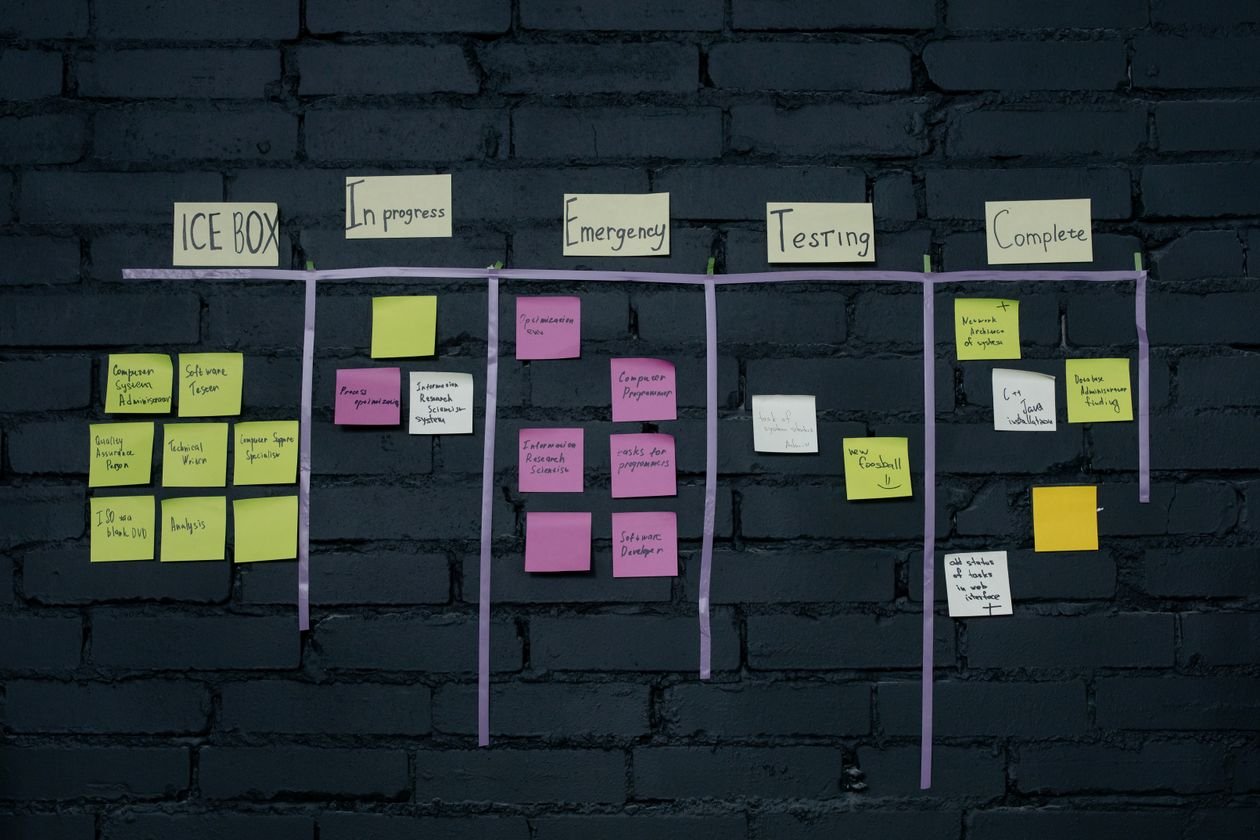
FIG. 02: Columns make the handoffs visible: automated, drafted, reviewed, done.
This matters most in the Black Friday and Cyber Monday week. For setup details, see the Black Friday 2026 Shopify automation checklist and the Q4 seasonal VA guide.
What does each option cost?
A Philippine virtual assistant typically costs about $3 to $15 per hour, depending on skill, based on published 2026 salary guides. AI tools are usually priced per seat or per resolved conversation, and prices change often, so check each vendor’s current pricing.
The cost owners miss is setup. Someone has to write the knowledge base, build and test the automations, and watch for failures. Plan it as a small project with an owner, not a switch you flip.
How do you decide what to automate?
Ask five questions about each task:
- Does the task repeat at least weekly?
- Are the rules clear enough to write down?
- What does a wrong answer cost? If it is cheap, automate. If it is expensive, keep a person.
- Does it involve money, legal terms, or a relationship you care about?
- Can someone check the result in under a minute?
If the answers are yes, yes, cheap, no, and yes, automate it. Otherwise keep a person in the loop.
What does this mean when you hire a virtual assistant in 2026?
If you are hiring now, test for both skills:
- Ask which AI tools they use and how they check the output.
- Ask for one automation they built, even a small one.
- Put AI in the paid test task. Have them draft three replies with AI, then find and fix three mistakes you planted.
The full process is in how to hire a virtual assistant in the Philippines. For role details, see the automation and AI virtual assistant and customer support virtual assistant pages.
Frequently asked questions
Will AI replace virtual assistants completely?
Not in the near term. Gartner expects AI agents to resolve 80% of common customer service issues by 2029, but that covers routine requests. Judgment, exceptions, and relationship work stay with people. Expect the VA role to shift toward running AI tools and checking their output.
Can AI handle customer support on its own?
For simple, repeatable questions backed by live order data, often yes. For refunds outside policy, upset customers, and unusual cases, no. Keep a human review queue and a clear rule for when AI hands a ticket to a person.
What should I automate first?
Start with tasks that repeat weekly, follow clear rules, and are easy to check: syncing Shopify orders to a spreadsheet or HubSpot, tagging tickets, drafting first replies, and flagging duplicate CRM contacts.
Is AI cheaper than a virtual assistant?
For narrow, high-volume tasks, AI is often cheaper per task. But it needs setup, monitoring, and cleanup, and it cannot own an outcome. Many owners get the best return from one virtual assistant paired with a few well-built automations.
How do I keep AI output accurate?
Connect it to live data instead of letting it guess, keep the knowledge base current, sample completed work every week, and have a person approve anything that involves money or policy.
Does my virtual assistant need to know Zapier or Make?
It helps. A VA who can read a failed run and adjust a simple scenario saves you from hiring a developer for small changes. For larger builds, use someone who designs the workflow, tests it, and documents it.
Sources
- Gartner: Agentic AI will autonomously resolve 80% of common customer service issues by 2029
- Infobip: 7.3 billion Black Friday and Cyber Monday interactions predicted for 2026
- Ringly: Shopify Black Friday Cyber Monday statistics for 2026
- HireTalent.ph: Virtual Assistant Salary in the Philippines 2026
Figures can change. The Gartner number is a forecast, not a measured result.
WANT THIS BUILT FOR YOUR STORE?
Automate the routing. Keep people for the judgment calls.
I build Zapier and Make workflows for teams using Shopify, HubSpot, and Gorgias, with checks and error alerts so failures do not go unnoticed.